
Skip to content
DSL Plastering

Plastering and skimming across Monmouthshire.

Walls and ceilings taken back to flat, hard and ready to decorate. Whole houses, single rooms, and floors screeded level underneath them. One firm, one price, one number to ring.

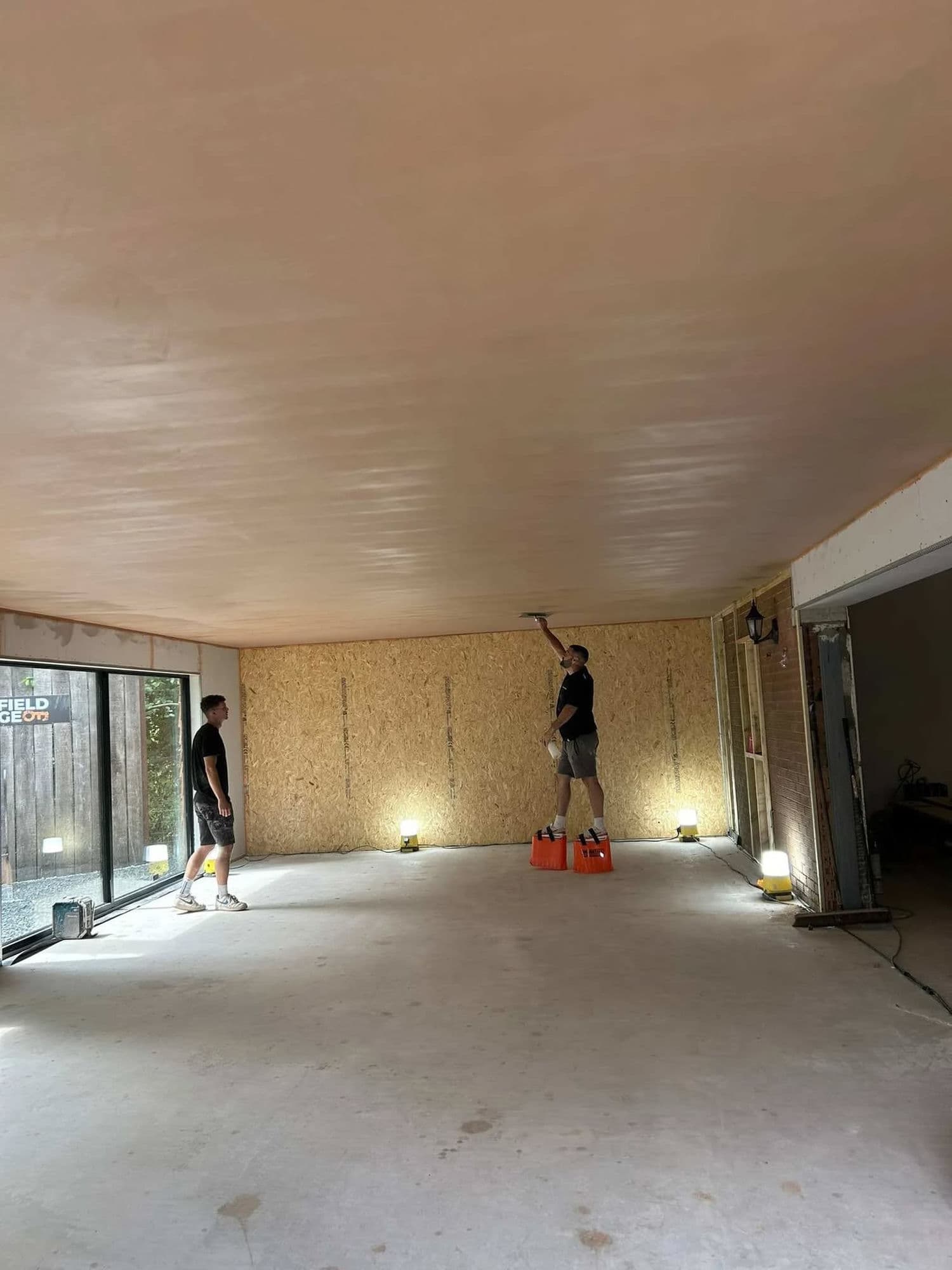
A DSL Plastering team finishing a freshly skimmed ceiling across a large extension, work lights raking across the flat surface

Inside

Plastering and skimming

A skim coat is only as good as what is under it. We tap the walls through before quoting, tell you what we find, and price the job that will actually last rather than the one that looks cheapest on paper.

  • Skimming over existing plaster
  • Full house plastering on new build and extension work
  • Plasterboarding and dry lining
  • Ceilings, including overboarding
  • Artex removal and encapsulation
  • Patch repairs and making good

New builds and extensions get boarded and skimmed throughout. Older houses more often need patching, reinforcing and a full skim to bring everything back to one plane. Both are ordinary work for us, and neither should leave your house full of dust for a fortnight.

Three routes

Can you just skim it?

Usually, and it is the cheapest and quickest answer when it is true. Sometimes it is not, and saying so up front is the difference between a wall that lasts and one you pay for twice.

Skim over what is there

When it is the answer

The existing plaster is sound, well stuck and flat enough to work with. Tired, patched and painted-over walls usually fall here.

What it involves

Surfaces prepared and sealed, then two coats of finish plaster worked up to a flat, hard face ready for a mist coat.
Overboard and skim

When it is the answer

The wall or ceiling is out of true, cracked through, or carrying Artex that is better left undisturbed than scraped off.

What it involves

Plasterboard fixed over the top to bring everything back to one plane, joints taped and the whole lot skimmed as one surface.

Take it back and start again

When it is the answer

The plaster is blown, hollow or holding damp. Skimming over this hides the problem for about a year and then it comes back through.

What it involves

Old plaster off, the wall inspected and made good, then floated and skimmed, or boarded out, depending on what is behind it.

Underfoot

Floor screeding

Screed is the layer nobody sees and everybody notices when it is wrong. Out of level by a few millimetres and your tiles lip, your boards creak, and your underfloor heating never quite performs.

  • Traditional sand and cement screed
  • Machine-applied flowing screed
  • Screeds over underfloor heating
  • Levelling and preparation before flooring
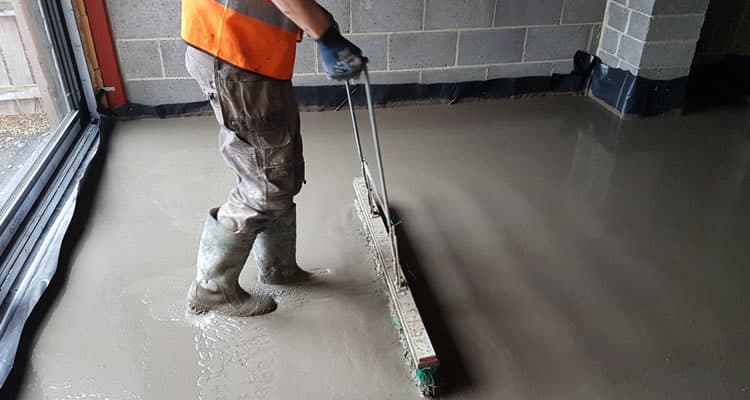
A flowing screed being levelled across a floor with a dappling bar before it sets

Drying time is the part people underestimate. We will give you a realistic date for laying floor coverings, not an optimistic one, because pulling up failed flooring costs far more than waiting did.

Common questions

Before you ring.

We cover Monmouth, Abergavenny, Chepstow, Usk, Raglan and everywhere between.

Working on the outside of the house instead? See rendering, or heritage and lime work for period and listed property.

Can you skim over my existing walls?
Usually yes, provided what is underneath is sound and well stuck to the wall. If the old plaster is blown, hollow or damp, skimming over it just hides the problem for a year. We tap the walls through before quoting and tell you honestly which option you are looking at.
Can you get rid of Artex?
Yes, by removing it or by encapsulating it, which means boarding or skimming over the top to leave a flat surface. Artex applied before the year 2000 can contain asbestos, so it should be tested before anyone starts scraping. We will talk you through the safe route for your ceiling.
How long does a screed take to dry?
A traditional sand and cement screed needs roughly a day per millimetre of thickness for the first 50mm, then longer beyond that, so a typical domestic screed is several weeks before floor coverings go down. Flowing screeds are quicker. Rushing it is the most common cause of failed flooring.
How much mess does plastering make?
Less than people expect, if it is done properly. Floors and anything staying in the room get sheeted, waste goes out as we work, and we clean up at the end of each day rather than at the end of the job. Removing old plaster is the dusty part, and we will tell you in advance if your job involves it.

Get a price for your plastering.

Send over the rooms, the rough sizes and when you want it done. We will come and look, then give you a fixed price in writing.

Call 07554 310409